Print advice
How to Choose the Right Paper for Your Print Project
Silk or uncoated? 130gsm or 170gsm? Here's how we help customers pick the right stock for the job and the budget.
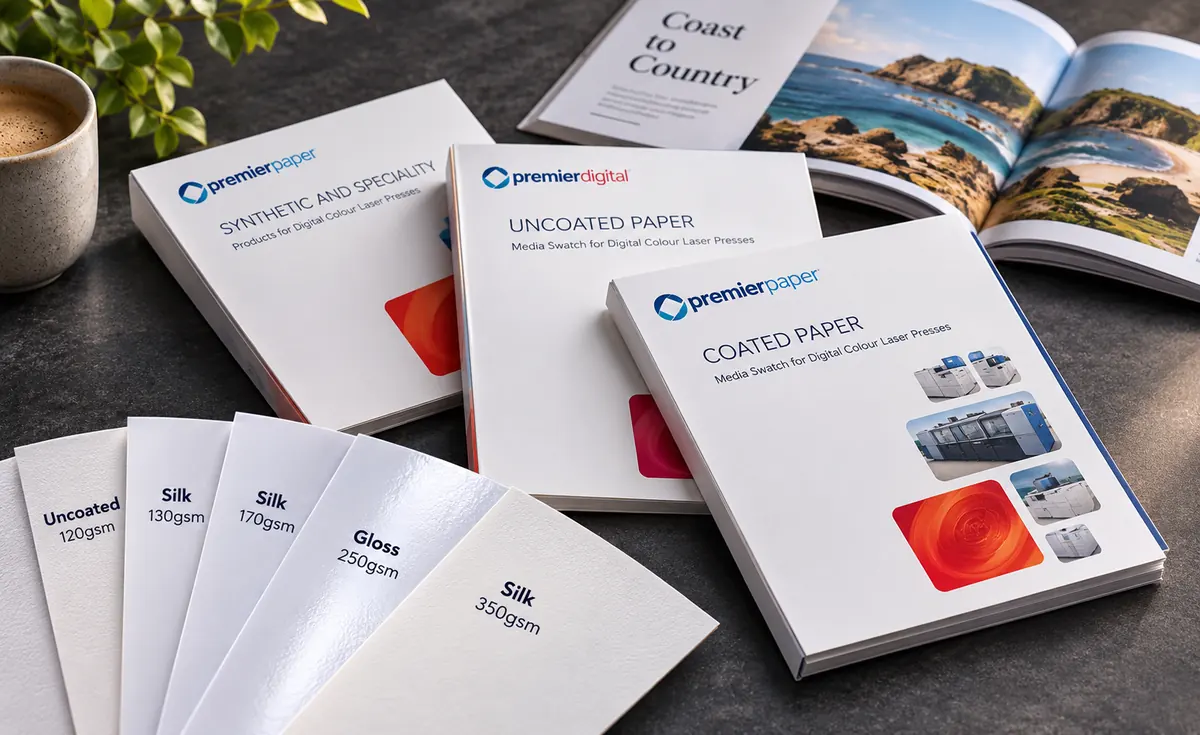
The paper you choose changes how your colours look, how a brochure feels in the hand and how well it folds and binds. It can even change what you pay in postage.
We often start with one simple question: what does the finished piece need to do? A leaflet handed out at an exhibition has different demands from a 48-page catalogue or a presentation brochure designed to be kept. Once we know the purpose, we can narrow down the paper without paying for weight or finishes that add little to the job.
What is the best paper for a brochure?
For many everyday marketing brochures, 130–150gsm silk is a good starting point for the inside pages. It produces sharp, attractive print, turns comfortably and doesn't make a multi-page booklet excessively bulky. If the design is full of photography, silk is often a particularly useful middle ground between colour impact and ease of reading.
For a shorter, more substantial piece, 170gsm silk may be worth considering. But on a 48- or 64-page publication, using heavier paper throughout adds bulk and weight quickly. A 250–300gsm cover with 130gsm silk text pages can give the brochure a quality feel without making every page unnecessarily thick.
That's why we like to know the page count and binding method before recommending a stock. A good choice for an eight-page handout isn't necessarily a good choice for a longer brochure or catalogue.
What do paper weights actually mean?
Gsm stands for grams per square metre. It tells you the weight of the paper, not its exact thickness or stiffness. Different stocks at the same gsm can feel quite different, especially when comparing coated and uncoated papers.
As a practical starting guide:
- 90–120gsm: useful for text-heavy documents, longer publications and jobs where total weight matters.
- 130–150gsm: a versatile choice for brochure text pages, leaflets and general marketing print.
- 170gsm: a more substantial feel for short brochures and promotional leaflets.
- 250–300gsm: often suitable for brochure covers, presentation cards and sturdier printed pieces.
- 350gsm: commonly considered for business cards and postcards, subject to the stock and finish.
These aren't fixed rules. A bulky uncoated 120gsm stock may feel thicker than you expect, while a coated stock of the same weight can feel quite different. That's why we prefer showing customers a sample rather than relying on the number alone.
Silk, gloss or uncoated paper?
Most commercial print jobs come down to a choice between three broad finishes:
- Silk: an excellent all-rounder for brochures and publications. It gives photography and colour good definition, with less reflection than gloss.
- Gloss: worth considering for image-led pieces where a shiny finish suits the design. The reflections can make long passages of text less comfortable to read under some lighting.
- Uncoated: has a more natural, tactile feel. It's often a good choice for stationery, editorial pieces and anything people may need to write on. Colour and photographs can appear softer than on coated paper.
A swatch shows you the paper. A printed sample shows you the result. We can put two similar-looking stocks side by side and still see a noticeable difference in how they reproduce the same artwork.
Will the paper fold and bind properly?
This is where paper choice starts to affect production. A heavier sheet with strong ink coverage can show cracking along a fold. Creasing can help, but stock, grain direction, artwork and finishing all need to be considered together.
For a saddle-stitched booklet, paper thickness affects how the pages sit and how much the inner pages creep towards the fore-edge. With Wire-O binding, we think about page turning, durability and whether the document needs to lie flat. A premium stock is wasted if the finished booklet won't open or turn properly.
Our binding guide and print finishes guide explain some of the options available.
Don't forget postage and the total cost
For a direct mail campaign, the weight of the paper is only part of the calculation. You need to consider the envelope, inserts, finished dimensions and complete packed weight. For example, Royal Mail's standard Letter format is limited to 100g and 5mm thickness, so a heavier insert can mean paying Large Letter rates even if the envelope's length and width haven't changed. Check both dimensions and fully packed weight before pricing a campaign.
It's the same with brochures. A more expensive stock isn't always the best use of the budget. Sometimes a heavier cover, a well-chosen finish or better photography will make more impact than increasing the weight of every sheet.
Recycled paper and responsible sourcing
If recycled content or certified sourcing is part of your brief, mention it before we quote. Not every natural-looking paper is recycled, and the options can vary by grade and availability. We can discuss suitable papers and check the specific credentials before any environmental claims are made.
Paper size and layout matter too. Choosing a format that makes efficient use of printing sheets can reduce unnecessary waste and may help the budget as well.
Our best advice: look at actual paper samples
Paper sample books are the kind of thing that makes this decision easier. You can compare coated, uncoated and speciality papers, feel the difference between weights and see what the surfaces look like up close. For an important brochure, a mock-up at the intended size and page count can be even more useful.
Before asking for a quote, it helps to have five things in mind:
- Purpose: is it a one-off handout, a mailing or something customers will keep?
- Format: finished size, number of pages and binding style.
- Artwork: mainly photography, text or heavy areas of solid colour?
- Quantity and delivery: how many, when and whether they need posting.
- Budget: the overall spend, including finishing and distribution.
And if you don't know which gsm or finish to specify, don't worry about it. Tell us what you're trying to achieve. We can suggest a couple of sensible stocks, explain the difference and help you make the decision before the job goes to press.